
Lab
Experimental Capabilities
The GeoD group has added more than $2M in advanced equipment to the UW–Madison capabilities and also shares facilities with the existing world-class rock mechanics laboratory here at UW–Madison, as well as the Thermal Geomechanics Laboratory. The collaborative nature of the Geological Engineering program, combined with state-of-the-art equipment developed by previous and current PIs/researchers, makes for a facility truly unrivaled. Not shown here are numerous other rock mechanics and geophysics instruments, such as benchtop ultrasonic velocity systems, acoustic emission systems, and fiber-optic sensing (lab and field), among others.
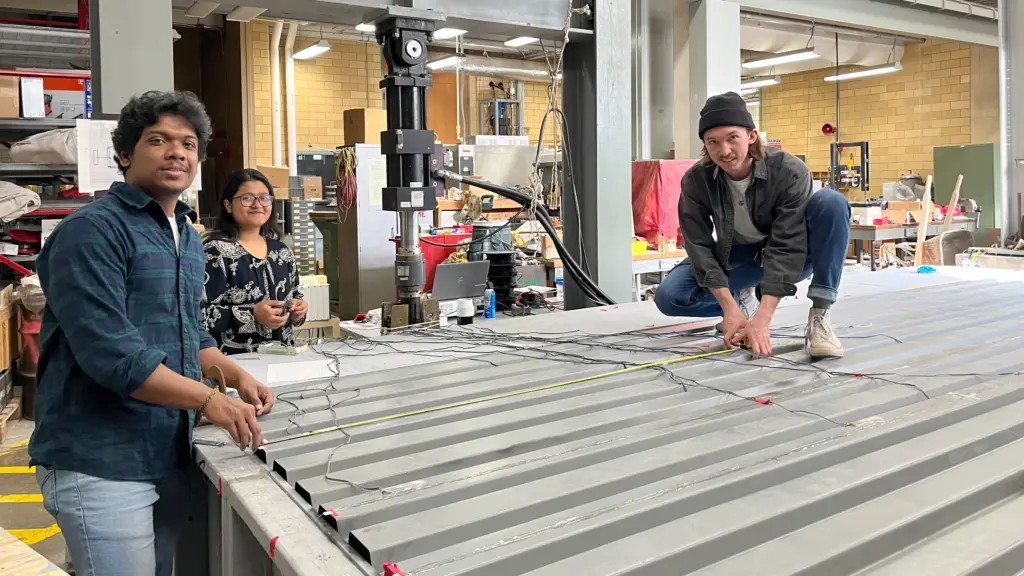
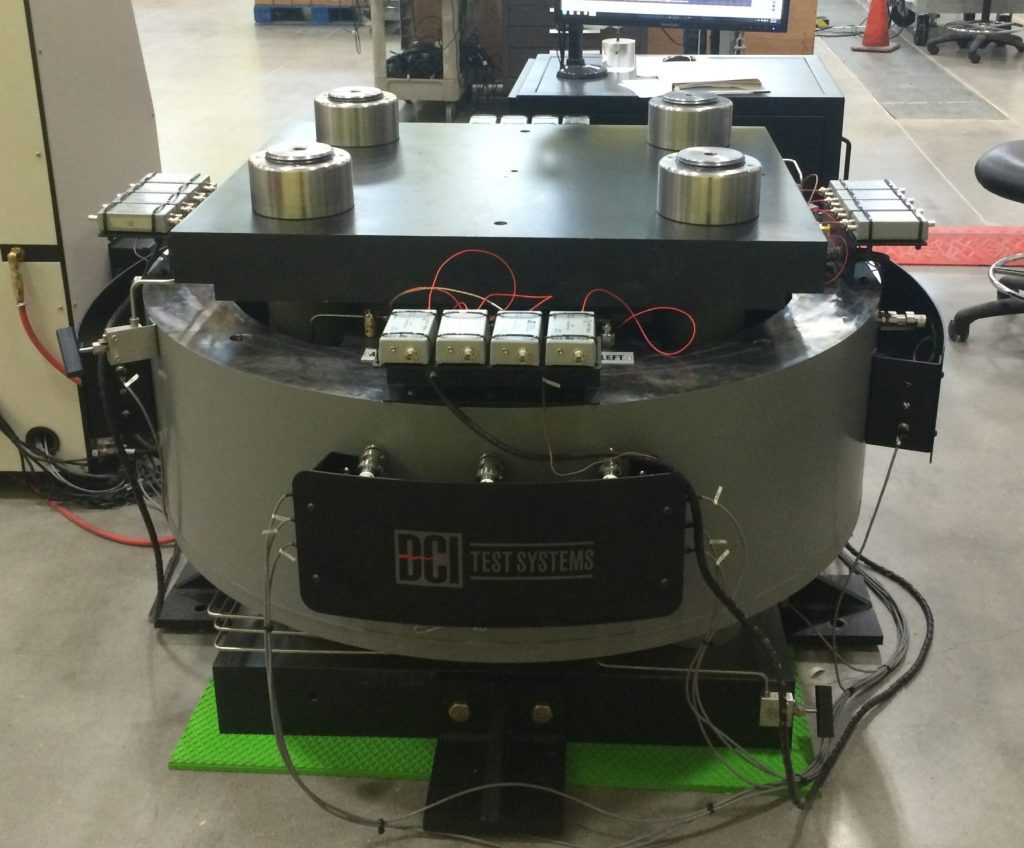
GeoD Polyaxial Apparatus
High-pressure and high-temperature polyaxial apparatus capable of stressing a large prismatic block (30 x 30 x 45 cm) in five independent zones (true triaxial and layered stress in the long dimension) up to 30 MPa and temperatures up to 200 C. System features a drill-through top lid while under stress and temperature conditions effectively simulating the wellbore drilling, cementing, hydraulic fracturing, and production processes in geothermal environments.
NER HPHT Triaxial Apparatus
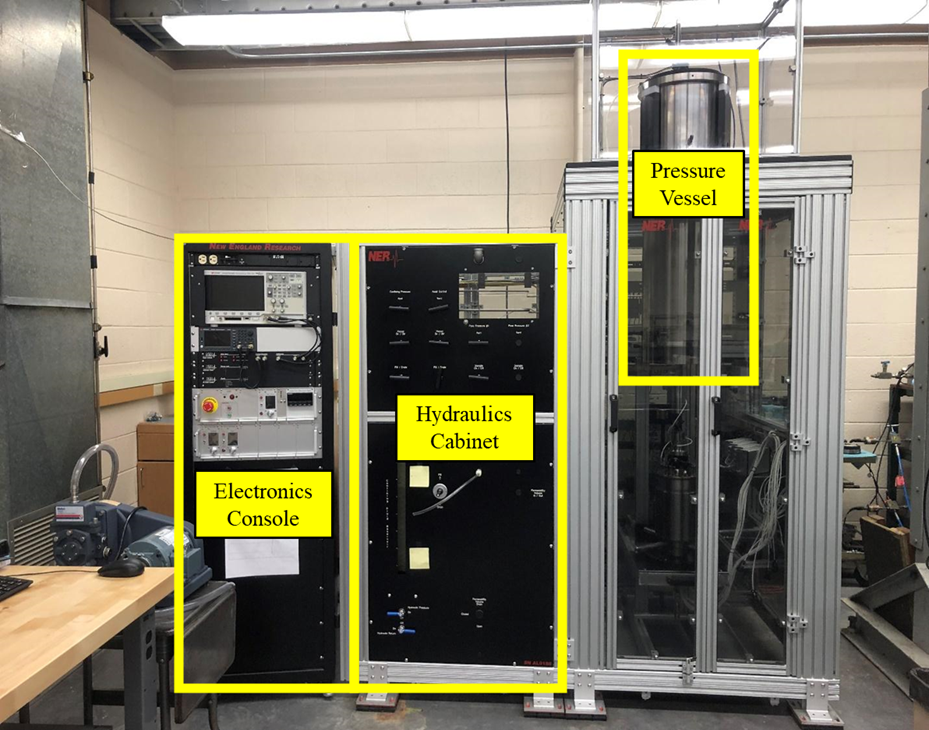
High-pressure and high-temperature triaxial apparatus that incorporates simultaneous geophysical measurements while automatically traversing arbitrary loading paths and environments. Confining and pore pressures up to 140 MPa. Axial force up to 4,000 kN. Temperature up to 150 C. Specimen diameters between 1-4 inches.
MTS 816 Triaxial Apparatus
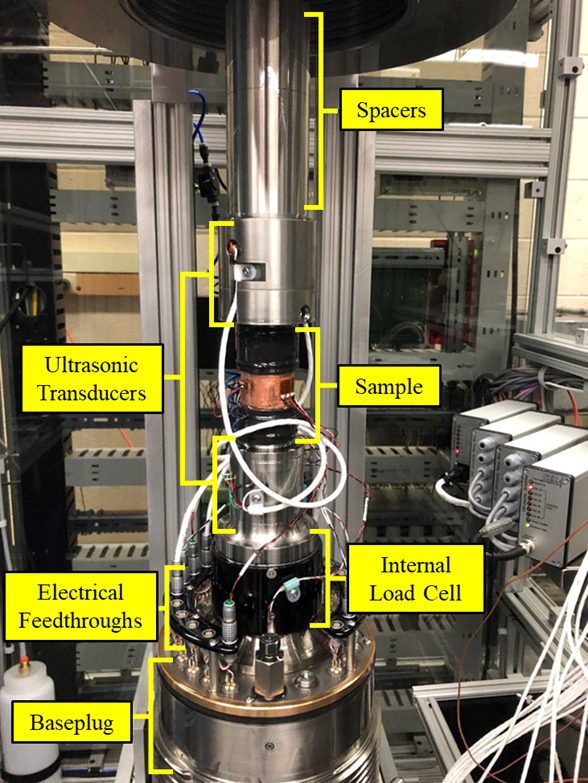
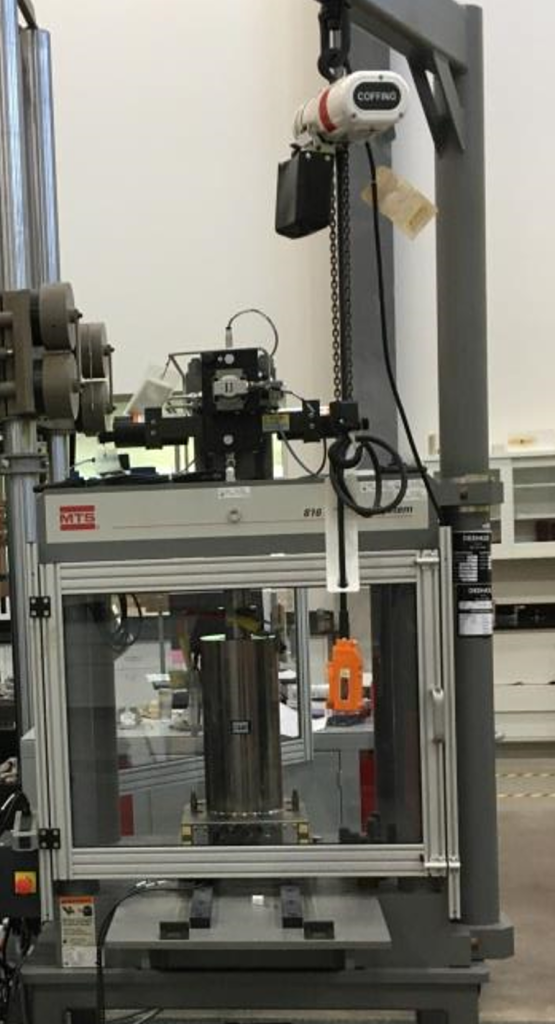
High-pressure triaxial apparatus that incorporates simultaneous geophysical measurements while automatically traversing arbitrary loading paths and environments. Confining and pore pressures up to 70 MPa. Axial force up to 500 kN. Specimen diameters between 1-2 inches.
Fiber Optic Sensing System
Information coming soon!